
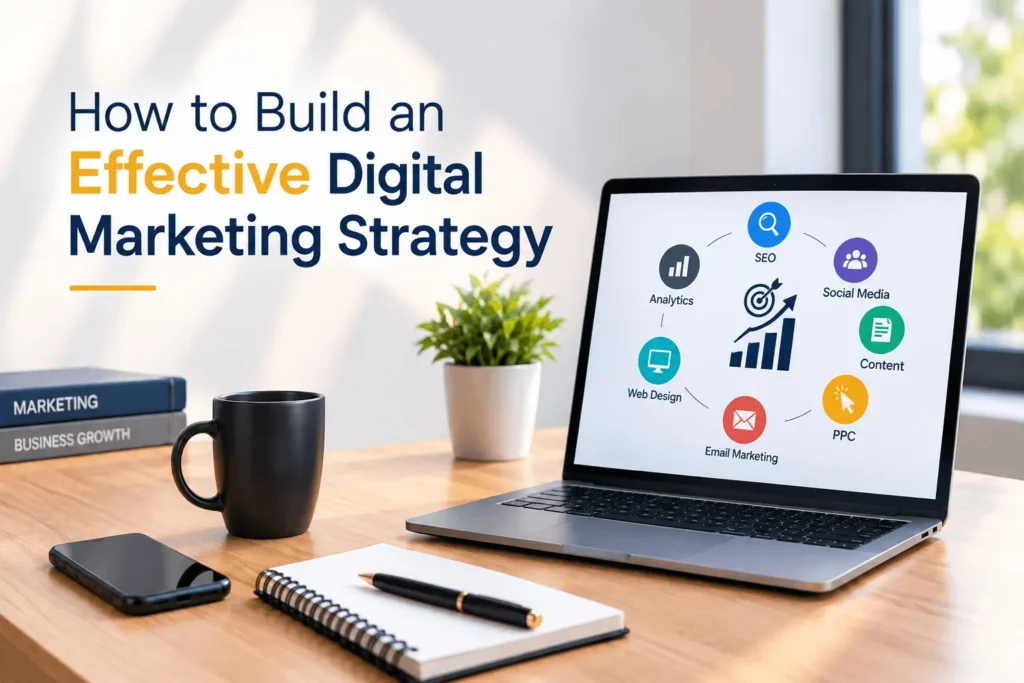
A strong digital marketing strategy helps businesses reach the right audience, increase brand awareness, generate leads, and grow online. Instead of using every marketing channel at once, businesses should focus on the platforms and tactics that match their goals and target customers.
Define Your Marketing Goals
Start by deciding what you want to achieve. Clear goals make it easier to choose the right marketing channels and measure results.
Common goals include:
- Increasing website traffic
- Generating qualified leads
- Improving brand awareness
- Increasing online sales
- Growing social media engagement
- Improving customer retention
Make your goals specific and measurable so you can track progress over time.
Understand Your Target Audience
Knowing your audience is essential for creating relevant marketing campaigns. Research their needs, interests, online behavior, and purchasing decisions.
Consider:
- Age and location
- Interests and preferences
- Problems they want to solve
- Preferred social media platforms
- Search behavior and keywords
- Buying habits
A clear understanding of your audience helps you create content that connects with potential customers.
Research Your Competitors
Competitor research can reveal opportunities and help you understand what is already working in your industry.
Analyze their:
- Website and SEO strategy
- Social media presence
- Content marketing
- Paid advertising
- Offers and promotions
- Customer engagement
Use this information to identify gaps and develop a strategy that provides additional value.
Choose the Right Digital Marketing Channels
You don’t need to use every online marketing channel. Select platforms based on your audience and business objectives.
Important channels include:
- SEO: Improve organic visibility and search engine rankings.
- PPC Advertising: Reach potential customers through paid search campaigns.
- Social Media Marketing: Build awareness and engage with your audience.
- Content Marketing: Provide useful information through blogs, guides, and other content.
- Email Marketing: Nurture leads and maintain customer relationships.
- Web Design: Create a professional website that supports conversions.
Using the right combination of channels can make your marketing efforts more focused and effective.
Create Valuable Content
Content should answer your audience’s questions and provide solutions to their problems. High-quality content can also support your SEO efforts and attract visitors through search engines.
Create different types of content such as:
- SEO-friendly blog posts
- Service and landing pages
- Social media posts
- Videos
- Infographics
- Case studies
- Email campaigns
Focus on providing value rather than simply promoting your products or services.
Optimize Your Website for Search Engines
SEO is an important part of a successful online marketing strategy. Optimize your website so search engines can understand your content and users can easily find the information they need.
Key SEO activities include:
- Keyword research
- On-page SEO
- Technical SEO
- Internal linking
- Quality content creation
- Mobile optimization
- Website speed optimization
- Local SEO
Use relevant keywords naturally instead of forcing them into every paragraph.
Use Paid Advertising Strategically
PPC advertising can help businesses reach potential customers quickly. Platforms such as Google Ads allow businesses to target users based on search queries, location, interests, and other factors.
For better PPC performance:
- Choose relevant keywords
- Write clear ad copy
- Create focused landing pages
- Set realistic budgets
- Track conversions
- Test different campaigns
Paid advertising works best when campaigns are continuously monitored and optimized.
Build a Social Media Presence
Social media allows businesses to communicate directly with their target audience. Choose platforms where your potential customers are most active.
A consistent social media strategy should include:
- Regular content publishing
- Engaging visuals
- Educational content
- Customer responses
- Promotional offers
- Performance tracking
Consistency helps maintain visibility and build stronger relationships with your audience.
Track and Measure Performance
An effective digital marketing strategy should always be based on data. Use analytics and marketing tools to understand what is working and where improvements are needed.
Important metrics include:
- Website traffic
- Conversion rate
- Leads generated
- Click-through rate (CTR)
- Cost per lead
- Return on investment (ROI)
- Social media engagement
- Search rankings
Regular performance analysis helps businesses make informed marketing decisions.
Continuously Improve Your Strategy
Digital marketing changes frequently, so your strategy should not remain the same forever. Review your results, identify weaknesses, and make improvements based on performance data.
Test different content, advertising messages, keywords, and marketing channels to discover what produces better results.
Conclusion
Building an effective digital marketing strategy requires clear goals, audience research, valuable content, the right marketing channels, and continuous performance tracking. By combining SEO, PPC advertising, social media marketing, content marketing, and a well-optimized website, businesses can build a stronger online presence and create sustainable opportunities for growth.
Ready to grow your business online? Contact Brand Flicker today to discuss your digital marketing goals and find the right strategy for your brand.